
Beyond the Home Office: Why UK Homeowners Are Rethinking Where They Meet Clients
Disclaimer: This is a pre-written guest post, published on behalf of The Warren. All thoughts, opinions, and advice provided are those of the writer.
More of us are working from rooms that used to be spare bedrooms, box rooms or garden sheds. According to the Office for National Statistics, 28% of working adults in Great Britain hybrid worked between January and March 2025, and the figure climbs to 45% among those earning £50,000 or more. A well-designed home office has become as much a part of the modern house as a decent kitchen.
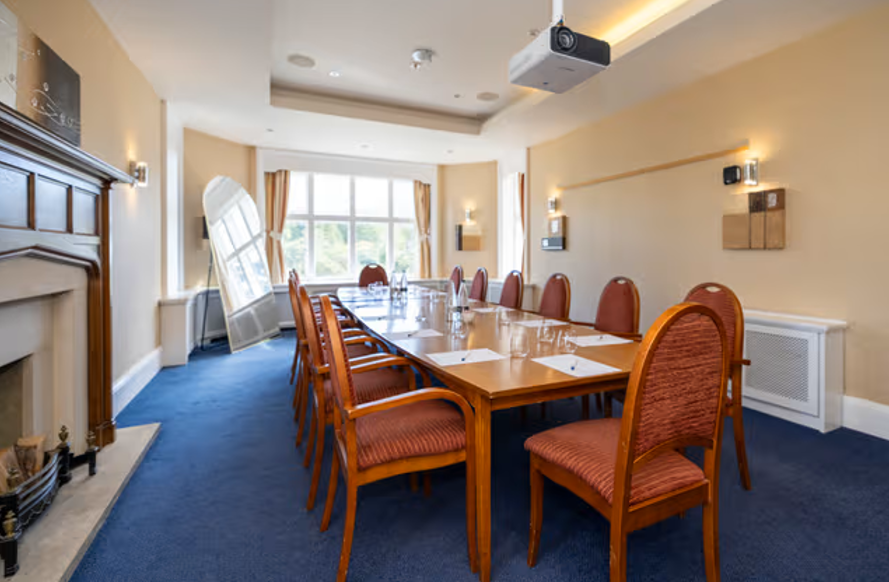
But there's a question that doesn't get asked often enough: what happens when someone actually needs to visit? A client, an investor, a small team for a planning day. A home office built for one person answering emails is a very different thing from a space that needs to host a client-facing meeting. This piece looks at how to design a home office that earns its keep day to day, the vocabulary worth knowing before booking external space, and when it's worth looking beyond the house altogether for somewhere more suited to business.
Why Homeowners Are Investing in Proper Workspaces
The days of working from a laptop on the sofa are largely behind us. Homeowners now treat the office as a genuine room, not an afterthought squeezed under the stairs. Garden rooms, converted lofts and repurposed dining rooms have all become popular projects, partly because a dedicated space helps separate work from home life psychologically as well as physically.
There's also a financial logic. A well-planned office adds to a property's appeal, and for employees required to work from home, GOV.UK sets out what can be claimed through tax relief for job expenses, including a portion of household costs in some circumstances. For homeowners considering a garden building rather than converting an existing room, the Planning Portal is the place to check permitted development rules, since size, height and proximity to boundaries can all affect whether permission is needed.
Designing a Home Office That Actually Works
A good home office earns its space rather than just occupying it. A few principles make the biggest difference:
Natural light first. Position the desk to catch daylight from the side rather than facing a window, which reduces screen glare and eye strain over long days.
Acoustics matter more than people expect. Bookshelves, rugs and curtains all soften a room and make video calls sound noticeably more professional.
Cable management isn't optional. A tangle of leads behind a desk undermines even the most tastefully decorated room the moment a camera turns on.
Storage should be closed, not open. Paperwork and equipment tucked behind doors keep the room looking calm rather than cluttered.
Invest in the chair before the desk. Posture problems tend to show up months later, by which point the damage is harder to undo.
Plan for hybrid conferencing equipment early. A decent webcam, an external microphone and business-grade wireless internet make far more difference to how a call comes across than expensive furniture.
These choices make a huge difference to solo, day-to-day productivity. Where they start to fall short is the moment other people need to walk through the front door.
When a Beautiful Home Office Isn't the Right Meeting Space
This is the pain point many homeowners run into eventually. However well a home office is styled, it wasn't built with visitors, capacity or professional distance in mind.
Space and Capacity
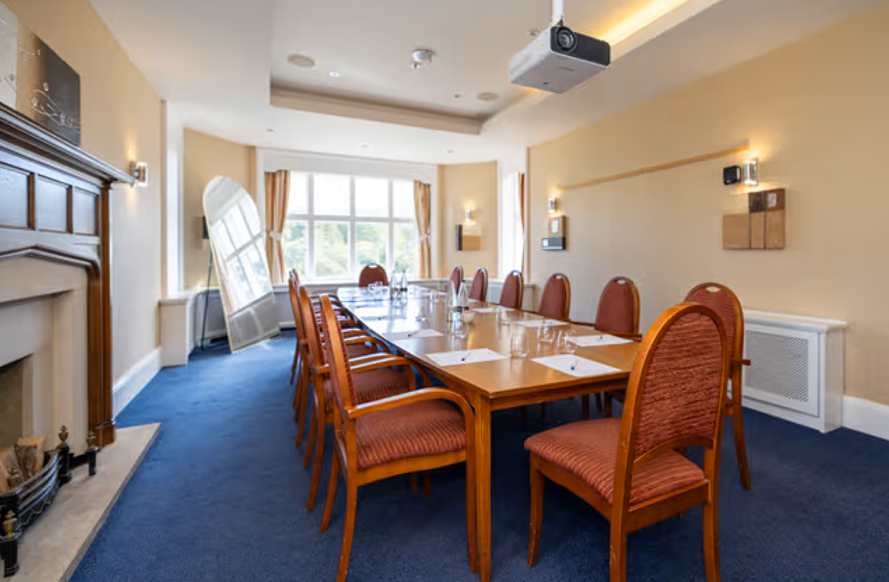
Most home offices are designed around one desk. Fitting four or five people around a coffee table, or worse, a kitchen island, rarely gives a meeting the focus it deserves. A dedicated meeting room, by contrast, is built to be reconfigured: boardroom style for a small executive discussion, theatre-style seating for a larger presentation, cabaret or classroom layout for training, and breakout spaces when a group needs to split into smaller conversations. Body language and eye contact are also harder to read in a cramped, informal layout, and that matters more than people assume when a decision is on the table.
Reliable Connectivity
Domestic broadband is built for streaming and browsing, not for six people simultaneously running a video call, screen-sharing a proposal and uploading files. A dropped connection mid-presentation undercuts the professionalism a homeowner has otherwise worked hard to create. Serviced venues typically run business-grade wireless internet alongside wired options, precisely because a stalled connection is the fastest way to derail an otherwise well-planned meeting.
First Impressions and Boundaries
There's also a simple matter of privacy. Not every homeowner wants a client walking past family photographs, the dog, or a partner working from the next room. A neutral, professional setting removes that discomfort entirely, for both host and guest, and it lends a level of corporate hospitality that's genuinely difficult to recreate around a kitchen table.
Practical Logistics
Parking, accessibility and refreshments all need thought too. A client arriving for a 10am meeting shouldn't be circling the street looking for somewhere to leave the car, and a session that runs past lunch works far better with catering already arranged than with someone dashing to the shops.
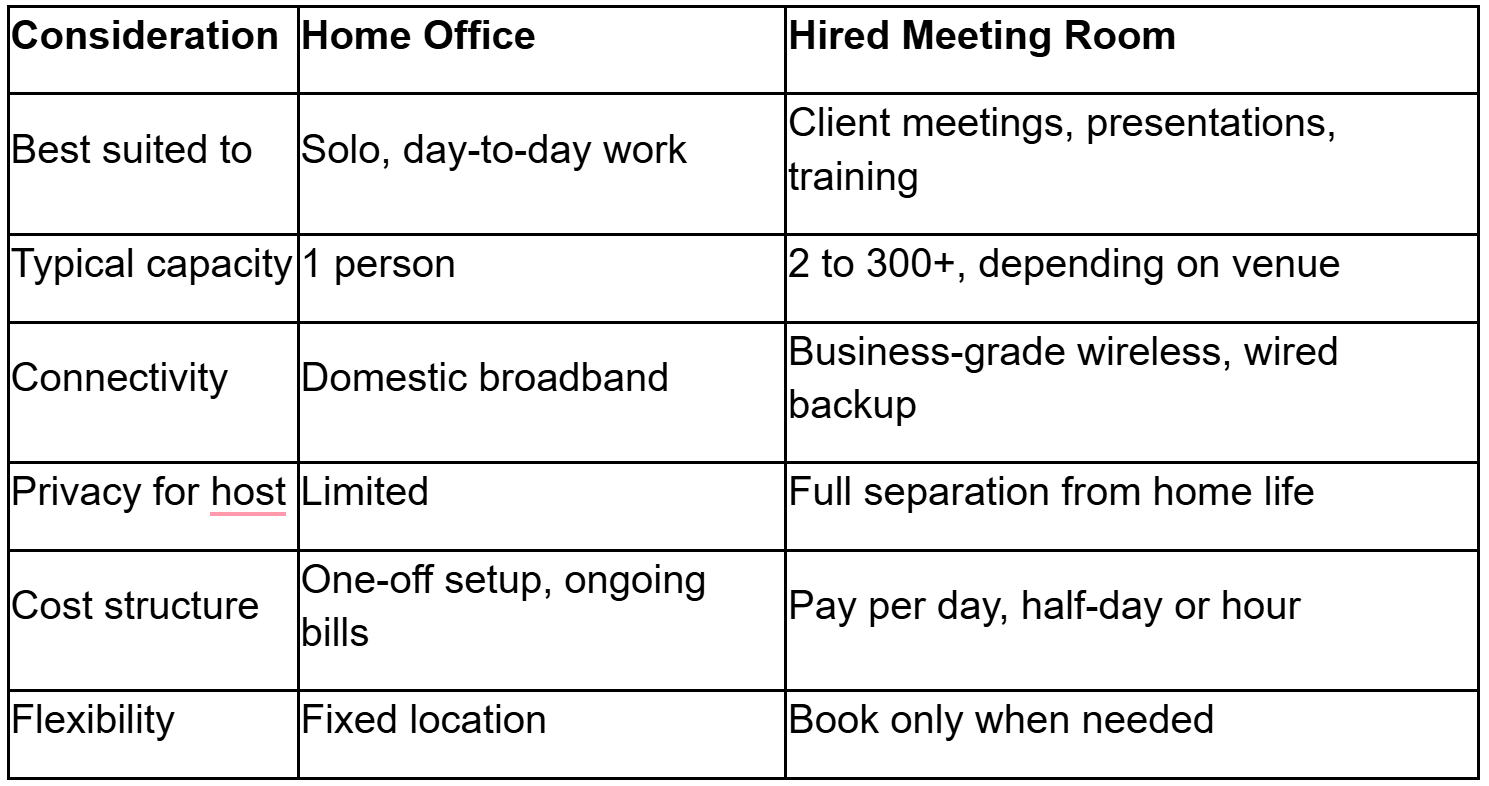
Home Office or Hired Room? A Quick Comparison
The Middle Ground: Home Comfort, Professional Meeting Space
None of this means the home office was a bad investment. It simply means most people end up using two spaces rather than one: home for concentrated, everyday work, and somewhere else for the occasions that call for a proper meeting room.
The appeal is straightforward: no fixed overheads, no compromise on impression, and a room genuinely built for the job rather than adapted from a spare bedroom for the afternoon.
How to Choose a Meeting Room for Hire
For anyone booking external meeting space for the first time, a few checks save a lot of hassle later.
Confirm the layout options. Boardroom, theatre-style, cabaret and classroom suit different meeting types, and a good venue will let the room be reconfigured rather than offering one fixed setup.
Ask what's included in the day rate. Wi-Fi, screens, flipcharts, refreshments and parking should ideally be part of the price, not extras added afterwards.
Check the capacity against the guest list, including a little breathing room. A room booked exactly to numbers feels cramped the moment someone brings a colleague along.
Look at accessibility and travel time for everyone attending, not just the host, and whether the venue sits near a transport hub or is more of an out-of-town option.
Clarify the hire type. Dry hire usually means the room only, while a day delegate rate typically bundles catering and equipment together, so it's worth checking which applies before comparing prices.
Read the cancellation policy. Meetings shift more often than anyone plans for, and flexible terms matter.
What Does Meeting Room Hire Typically Cost in the UK?
Day delegate rates vary considerably by region, room size and what's included. In central London and other premium business districts, prices for a full day with catering commonly range from roughly £35 to £70 per person, while venues further from the capital, including much of Kent and the South East, tend to sit toward the lower end of that scale. Half-day and room-only (dry hire) rates bring the cost down further for shorter or more informal sessions, and hourly rates suit a quick one-to-one far better than a full-day package.
Room size also drives cost: a small boardroom for four to six people is priced very differently to a conference space built for fifty or more. It's worth comparing a handful of venues directly, since "day delegate rate" can mean quite different things depending on what catering, Wi-Fi and hybrid conferencing equipment are bundled in.
Frequently Asked Questions
Is it worth hiring a meeting room instead of using a home office or café?
For a genuinely client-facing meeting, usually yes. A café offers little privacy or reliable connectivity, and a home office raises the boundary issues covered above. A hired room removes both problems for the cost of a single booking.
What's the difference between a serviced office and meeting room hire?
A serviced office is typically a longer-term arrangement, often including a private office or coworking desk on a rolling contract. Meeting room hire, by comparison, is booked as needed, by the hour, half-day or day, with no ongoing commitment.
Do hired meeting rooms include equipment like projectors and video conferencing?
Most do. Expect screens or projectors, flipcharts and Wi-Fi as standard, with better-equipped venues also offering hybrid conferencing kit for guests joining remotely. It's still worth confirming exactly what's included before the day, particularly for anything technical.
Getting the Balance Right
A well-designed home office and access to a professional meeting room aren't competing choices; they solve different problems. The home office supports the quiet, repetitive work of running a business day to day. The hired room steps in when a meeting genuinely needs space, privacy and a bit of polish that a house, however nicely decorated, was never quite designed to provide.
For UK homeowners balancing both, the smartest approach is often the simplest one: build a home office that suits the daily grind, and keep a trusted local venue in mind for the days that call for something more.






[AD] Brakes in London tend to wear down far quicker than people realise. Discover why giving your car a little attention before a big trip can make the whole journey feel calmer and safer.