
How to Plan Your First Family Motorhome Holiday: Practical Tips for Travelling with Kids
Disclaimer: This post is a pre-written guest post published on behalf of Oaktree Motorhomes. All view and opinions expressed are those of the writer and do not necessarily represent those held by Me Becoming Mum.
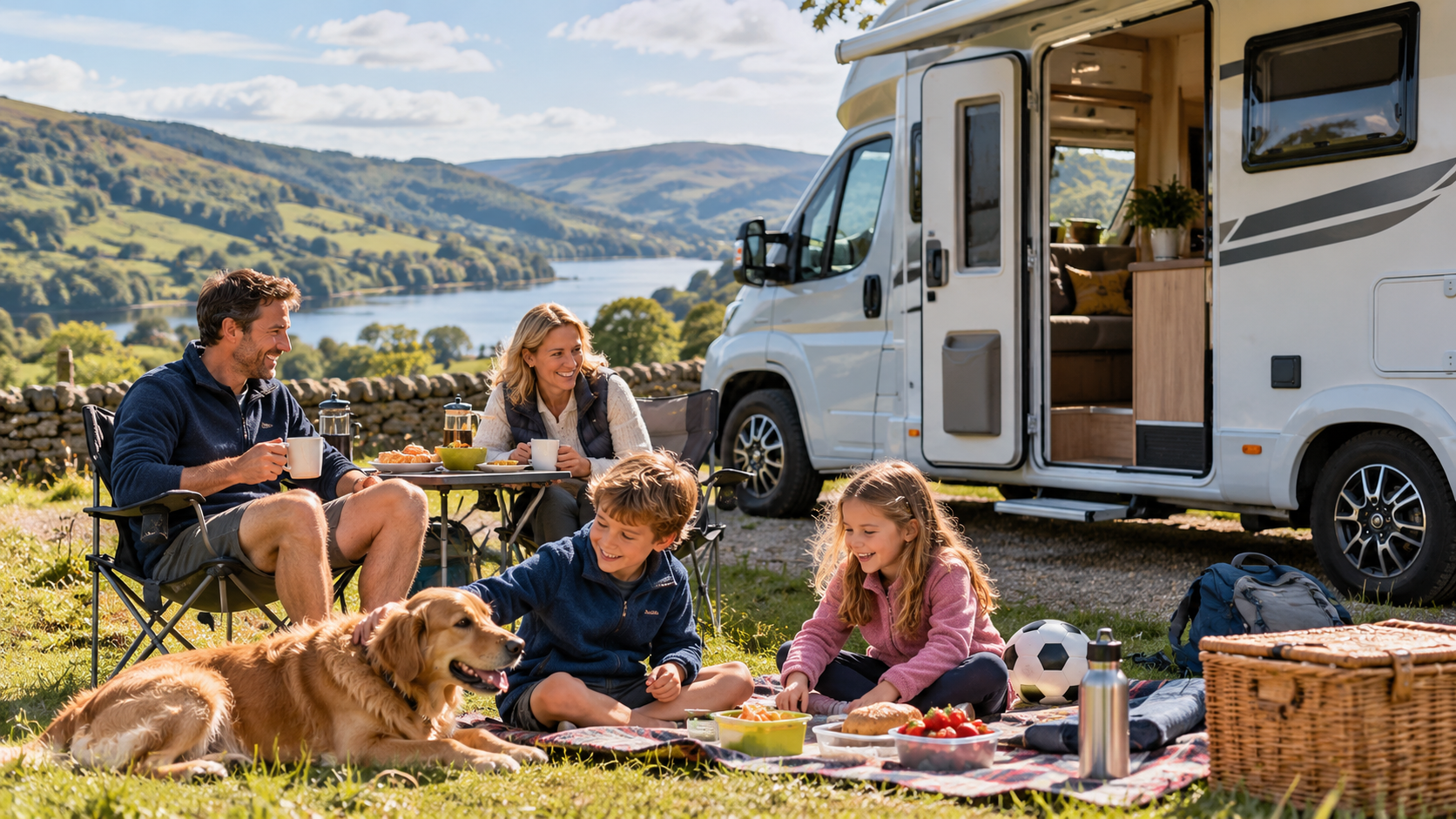
A family motorhome holiday is a road trip in which one vehicle provides transport, sleeping accommodation, storage, and many of the everyday facilities a family needs while traveling. Instead of repeatedly packing suitcases, checking into hotels and planning every meal around restaurants, parents can take a small version of home with them.
That flexibility can be especially useful when travelling with children. A motorhome gives families room for clothes, toys, food, and outdoor equipment, while features such as beds, a kitchen, a fridge, and a toilet can make longer journeys easier.
The first trip can still feel daunting. You have routes to plan, campsites to choose, storage limits to consider, and driving routines to rethink.
The key is to choose the right vehicle, keep distances realistic, pack carefully and leave enough flexibility for family life to happen naturally.
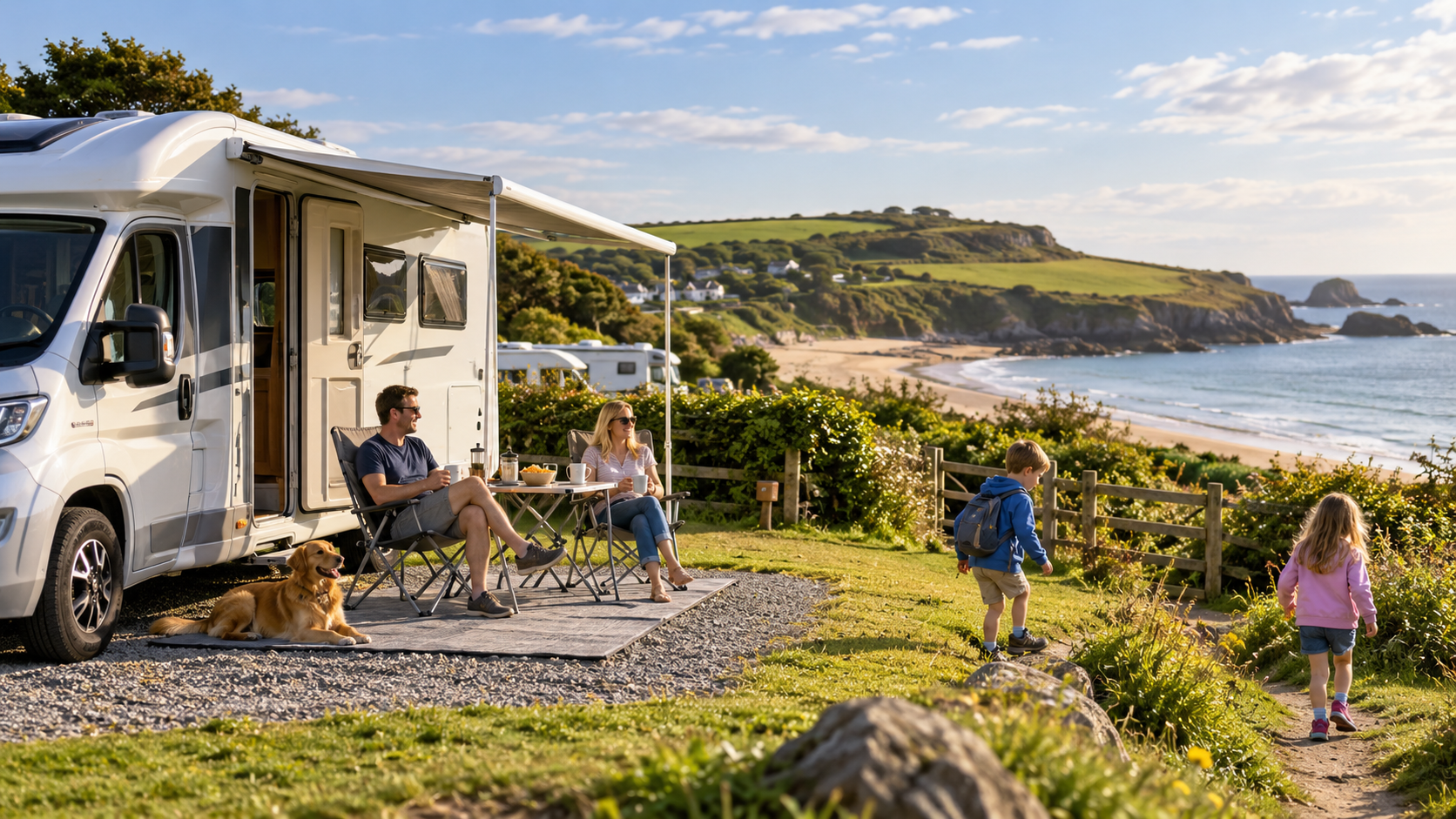
Why Can a Motorhome Be a Good Choice for a Family Holiday?
A motorhome can be a good choice for a family holiday because it combines transport and accommodation while giving parents more control over the pace of the trip. Children rarely follow a perfect travel schedule, so being able to stop, eat, rest, or change plans can be extremely helpful.
Unlike a hotel-based holiday, motorhome travel allows families to visit several places without repeatedly packing and unpacking. Parents can also bring familiar food, bedding and toys.
The main benefits include:
More flexibility when traveling with children
Extra storage for clothes, toys and outdoor equipment
The ability to prepare simple meals
Easier access to toilet and rest facilities
Freedom to combine several destinations
Less disruption from changing hotels
For many families, the biggest advantage is simply being able to travel at their own pace.
How Do You Choose the Right Motorhome for Travelling with Kids?
Choosing the right motorhome means matching passenger capacity, sleeping space, storage, and onboard facilities to how your family actually travels. Bigger is not automatically better because larger vehicles can be harder to park and maneuver.
There are five main steps.
Count passengers. Make sure everyone has a suitable belted travel seat.
Check sleeping capacity. Study the actual bed layout rather than relying only on the berth number.
Assess storage. Consider clothes, food, bikes, pushchairs and children’s equipment.
Think about vehicle size. More space can mean more challenging parking and access.
Compare layouts. Decide whether your family prefers fixed beds, convertible beds, a larger lounge or more storage.
Families comparing motorhomes for sale should think about how the vehicle will work at breakfast, bedtime and during wet-weather days, not just how spacious it appears when empty.
How Much Sleeping and Living Space Does Your Family Need?
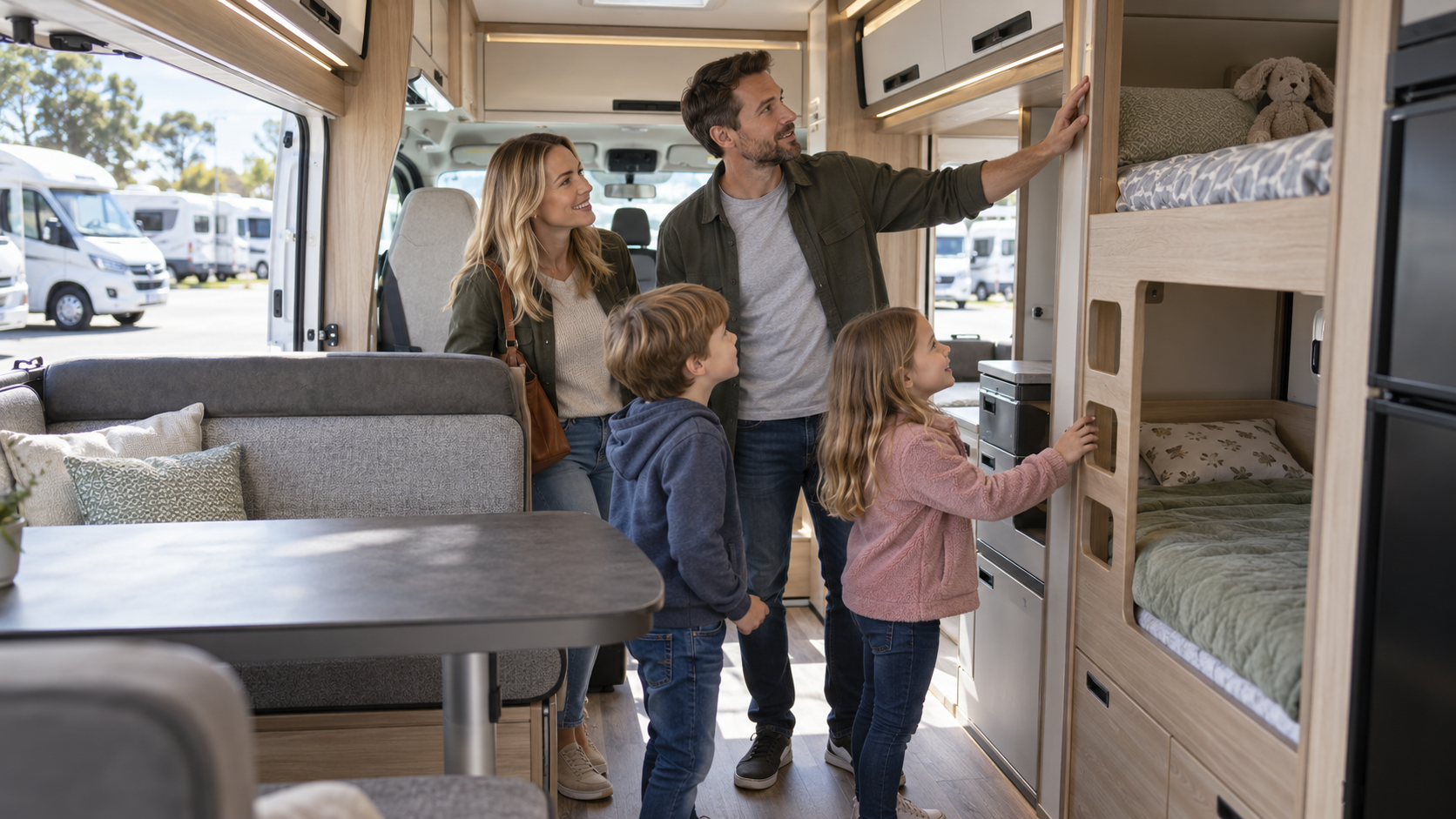
A family needs enough sleeping and living space for everyone to rest comfortably without turning each morning and evening into a complicated furniture-moving exercise. Berth numbers are useful, but they do not tell the whole story.
Some layouts provide fixed beds, while others convert a dining or lounge area each night. Fixed beds save time, but they take up permanent floor space.
Larger families may need 6-berth motorhomes, while smaller households may find some 3-berth layouts suitable. The best choice depends on how you'll actually use the space.
Which Motorhome Features Are Most Useful for Families?
Family-friendly motorhome features are the facilities that make cooking, sleeping, washing and traveling easier. The most useful options depend on the children’s ages, trip length and time of year.
Useful features can include:
Kitchen
Toilet and shower
Fridge
Heating
Storage lockers
Awning
Bike rack
USB or charging points
Suitable child-friendly traveling seats
Not every family needs every feature. A weekend on a fully equipped campsite may require fewer onboard facilities than a longer touring holiday.
Where Should You Go on Your First Family Motorhome Trip?
The best first family motorhome trip is usually a simple journey with manageable driving distances and reliable campsites. A first trip is not the ideal time to attempt an exhausting multi-stop tour.
Staying reasonably close to home can reduce pressure and make it easier to handle forgotten items or changing plans.
Established campsites are particularly useful for beginners because facilities such as electric hook-up, water, waste disposal and showers simplify everyday routines.
Try staying two nights at some locations rather than moving every morning. Children often enjoy having time to explore a beach, park or woodland trail without immediately returning to the road.
Countryside areas, coastal routes and destinations near national parks can all work well. What matters most is whether the itinerary leaves enough time to enjoy them.
How Do You Plan a Family-Friendly Motorhome Route?
Planning a family-friendly motorhome route means balancing the places you want to visit with realistic driving times, suitable overnight stops and enough flexibility for children.
Five steps make the process easier.
Choose your main destination. Build the route around the place you most want to visit.
Estimate realistic driving times. Allow more time than you might in a car.
Identify campsites. Check suitable overnight stops before traveling.
Add child-friendly activities. Parks, beaches and attractions can break up the journey.
Leave spare time. Avoid filling every day with fixed plans.
A motorhome holiday should not feel like a race between destinations. A slower route is often more enjoyable for everyone.
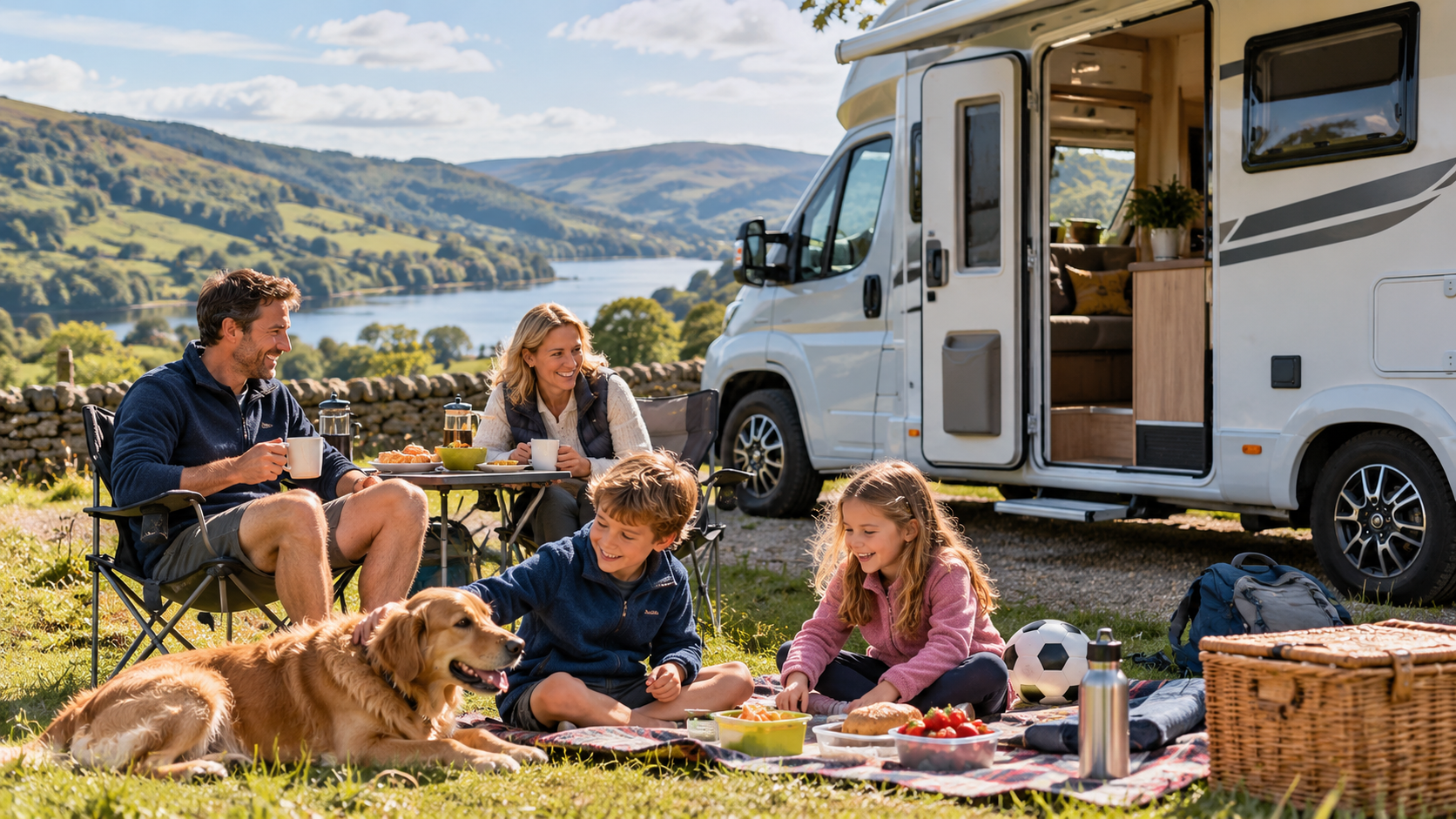
What Should You Pack for a Motorhome Holiday with Children?
A family should pack enough to remain comfortable while avoiding unnecessary items that take up limited storage space. Pack by category so that belongings are easier to find.
Clothing and Personal Essentials
Useful items include:
Weather-appropriate clothing
Waterproof jackets
Comfortable shoes
Toiletries
Towels
Sleepwear
Food and Kitchen Essentials
Keep meals simple and easy to prepare.
Consider:
Easy meals
Snacks
Reusable water bottles
Basic cookware
Children’s cups and plates
Entertainment for Children
Bring a small variety rather than too many toys.
Useful options include:
Books
Small toys
Travel games
Tablets or headphones
Outdoor toys
Outdoor and Campsite Equipment
Common items include:
Camping chairs
Picnic blanket
Torch
Bikes or scooters where practical
Outdoor footwear
How Can You Keep Children Comfortable During Long Drives?
Keeping children comfortable during longer journeys requires sensible driving distances, regular breaks, food, entertainment and realistic expectations.
There are six useful principles.
Take regular breaks. Give children time to stretch and use the toilet.
Keep snacks accessible. Simple food and water can prevent unnecessary stops.
Prepare entertainment. Books, music and travel games can help.
Choose comfortable clothing. Soft layers are usually better for long journeys.
Consider normal routines. Where possible, travel around younger children’s nap times.
Limit daily mileage. Long driving days can quickly make the holiday tiring.
Journey time is part of the holiday. A relaxed lunch stop or park visit isn't wasted time if everyone arrives happier.
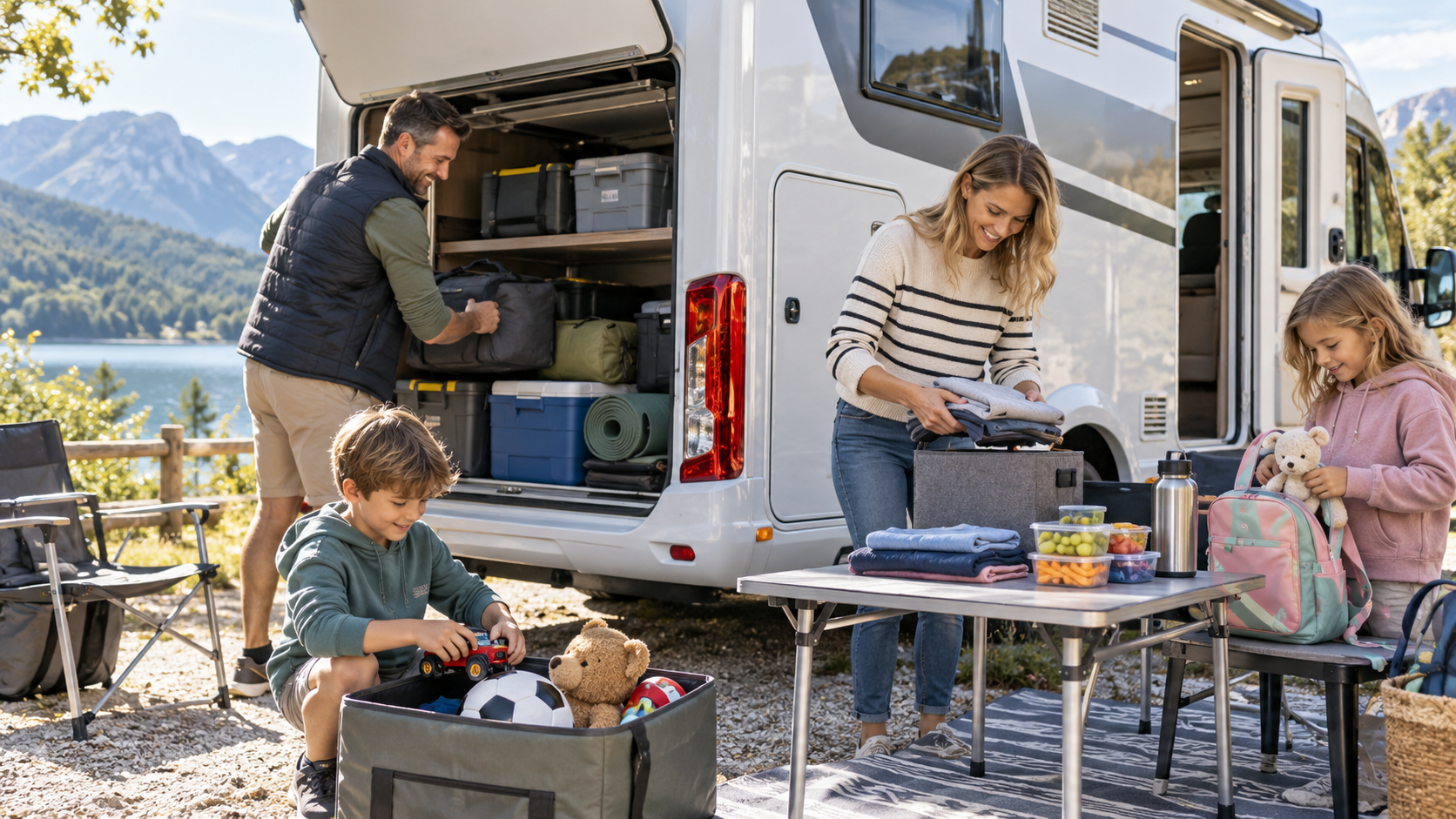
How Do You Keep a Motorhome Organised When Travelling as a Family?
Keeping a motorhome organized requires giving belongings permanent storage locations and creating simple routines. This matters because several people are sleeping, eating and changing clothes in a compact space.
Six habits can help:
Give each person a storage area.
Use packing cubes or storage boxes.
Keep everyday items easy to reach.
Store muddy shoes near the entrance.
Create a simple bedtime setup routine.
Return belongings to their assigned places.
Some motorhomes offer larger lockers or garages for bulky equipment, but good organization is usually more important than having huge amounts of storage.
How Can You Make Campsite Life Easier with Kids?
Campsite life becomes easier with children when parents choose sites with practical facilities and understand what is available before arrival.
Useful facilities can include:
Toilets and showers
Electric hook-up
Fresh-water points
Waste disposal
Laundry facilities
Children’s play areas
Nearby walking routes
Shops or cafés
Parents should also check arrival times, quiet hours, pitch rules and access requirements before travelling.
During busy school holidays, booking ahead is sensible because popular family sites can fill quickly.
Once parked, give children clear boundaries around the pitch. Campsites may feel relaxed, but moving vehicles and unfamiliar surroundings still require supervision.
What Safety Checks Should You Make Before Traveling?
A family should complete basic vehicle, passenger and interior safety checks before every journey because loose objects and unsecured equipment can become hazards once the motorhome starts moving.
Before departure, check that you have:
Secured loose objects
Closed cupboards and drawers
Secured doors and windows
Seated passengers correctly
Checked tyres and pressures
Checked exterior lights
Prepared gas and electrical systems correctly
Secured bikes, awnings and other external equipment
Drivers should also remember that a motorhome is usually taller, wider and heavier than a family car. This affects braking, cornering and access to height-restricted roads or car parks.
Always follow the manufacturer’s instructions and applicable UK road-safety requirements.
What Are the Most Common First-Time Family Motorhome Mistakes?
Overplanning, excessive driving, poor packing and unrealistic expectations are among the most common mistakes on a first family motorhome holiday.
Six mistakes are particularly common:
Overplanning the itinerary. Leave room for spontaneous changes.
Driving too many hours each day. Keep stages manageable.
Overpacking the motorhome. Take only items you are likely to use.
Ignoring campsite booking requirements. Check availability in advance.
Forgetting meals and snacks. Keep easy food accessible.
Underestimating family routines. Allow extra time for getting ready.
The simplest solution is to make the first trip intentionally easy rather than trying to fit everything into one holiday.
How Do You Prepare for Your First Family Motorhome Holiday?
Preparing for a first family motorhome holiday means making the important decisions before departure while keeping the trip itself flexible.
There are seven main steps.
Choose a suitable motorhome. Match the berth, seats, layout, and storage to your family.
Plan a realistic route. Avoid excessive daily mileage.
Reserve campsites where necessary. This is especially important during busy periods.
Prepare a packing list. Focus on useful clothing, food and equipment.
Plan simple meals and snacks. Keep cooking straightforward.
Complete vehicle and safety checks. Secure everything before leaving.
Explain the trip to the children. Set simple rules about seatbelts, storage and campsite behaviour.
Good preparation reduces stress, but you don't need to plan every hour.
Conclusion
A successful first family motorhome holiday does not require an ambitious itinerary or huge amounts of equipment. It requires a suitable vehicle, sensible preparation and enough flexibility to adapt when plans change.
Choose sleeping and traveling arrangements carefully, keep driving days manageable and pack useful items rather than everything you might need.
It also helps to choose campsites that make everyday routines straightforward and to leave enough time for spontaneous stops.
Motorhome travel gives families a unique mix of mobility and familiarity. The scenery can change while beds, favourite belongings, food and everyday comforts travel with you.
For a first trip, simplicity helps. Once the family understands how motorhome travel works, longer routes and more ambitious adventures become much easier to plan.



[AD] Brakes in London tend to wear down far quicker than people realise. Discover why giving your car a little attention before a big trip can make the whole journey feel calmer and safer.